


Greece Beyond Santorini
Santorini is undeniably beautiful. Those white-washed buildings clinging to cliffs, sunsets over the caldera, blue-domed churches appearing on every postcard. But here’s the thing: you’re sharing that experience with millions of others. Cruise ships disgorge thousands of visitors daily, restaurants price their menus for once-in-a-lifetime tourists, and finding a quiet moment to actually appreciate the beauty becomes a challenge.
Meanwhile, dozens of Greek islands offer everything that makes the Aegean special, the authentic tavernas, warm hospitality, ancient history, and stunning beaches, without the overwhelming crowds. These aren’t second-tier alternatives; they’re where Greeks holiday, where families have run the same waterfront taverna for generations, where you’ll discover that peaceful Greek island life you’ve been dreaming about.
The trend is clear: travellers are seeking quieter, less-crowded Greek islands that deliver authentic experiences. Let’s explore some islands that locals have known about all along.
Naxos: The Island That Has Everything
Naxos is the largest of the Cyclades, yet somehow it flies under most tourists’ radar. That’s their loss and your gain. This island delivers variety that smaller islands simply can’t match.
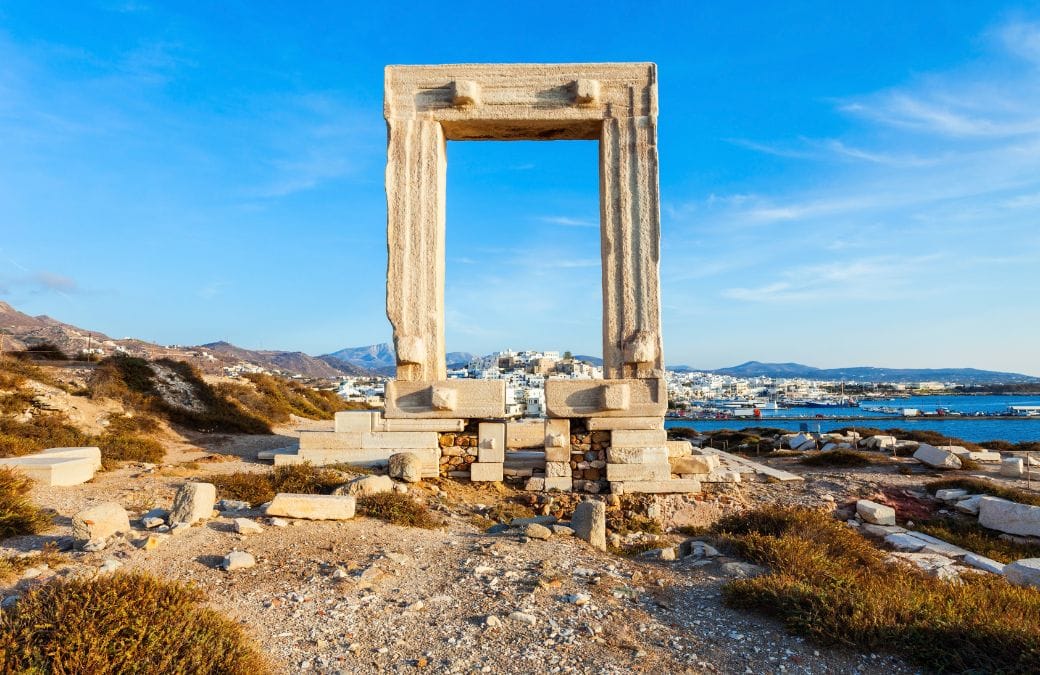
The main town, Hora, has a properly lived-in feel. The Venetian kastro (castle) district rises above the harbour, its narrow medieval streets home to locals rather than souvenir shops. The Temple of Apollo’s marble doorway, standing alone on a small islet connected by a causeway, creates one of Greece’s most romantic sunset spots, with far fewer people than Santorini’s Oia.
Naxos’s beaches are genuinely exceptional. Agios Prokopios and Plaka offer miles of golden sand and crystal-clear water, with enough space that you’ll never feel crowded. The beaches on the south coast, like Mikri Vigla, attract windsurfers and kitesurfers who’ve discovered some of the Aegean’s best conditions.
The interior reveals a different Greece entirely. Mountain villages like Apiranthos and Halki maintain traditions going back centuries. Stone houses with slate roofs, elderly men in kafeneia playing backgammon, women selling home-made preserves, this is Greece beyond the beaches.
Naxos also produces outstanding food. The island is agriculturally rich, growing potatoes, olives, and citrus fruits that end up in local tavernas. The local cheese, graviera, is protected by EU designation. Kitron, a citrus liqueur made only here, makes an excellent digestif. When your meal includes vegetables from the taverna owner’s garden and fish caught that morning, you taste the difference.
Paros: Charm Without the Price Tag
Paros has long been popular with Greeks, which tells you something. The main towns, Parikia and Naoussa, have genuine character rather than feeling like resort developments.
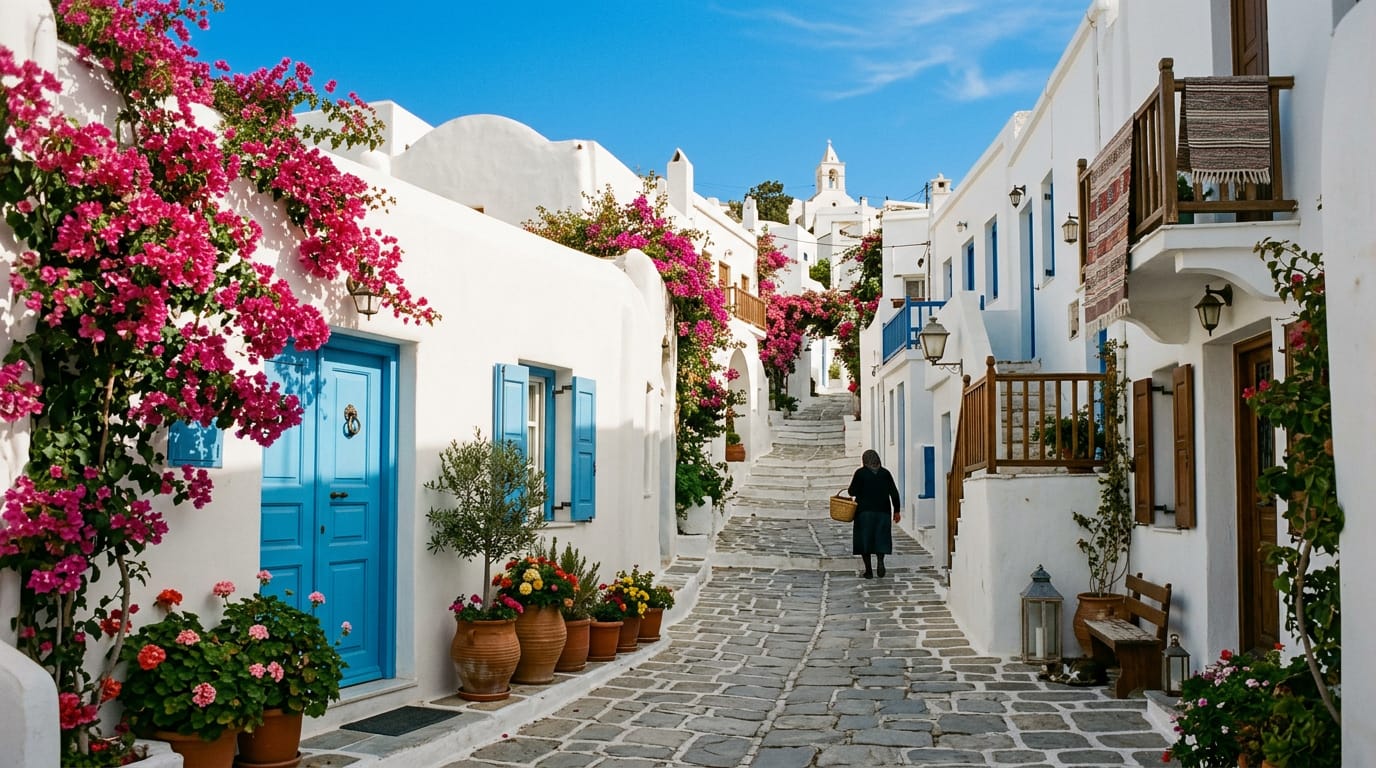
Parikia’s old town is a maze of whitewashed houses, bougainvillaea-draped lanes, and small squares where locals gather at kafeneia. The Panagia Ekatontapiliani, a Byzantine church dating to the 4th century, is one of Greece’s most significant early Christian monuments. Unlike many island churches that cater primarily to tourists, this is a working parish where you’ll find local families lighting candles.
Naoussa, on the north coast, is a picture-perfect fishing harbour that manages to be popular without losing its soul. Fishing boats still tie up alongside waterfront restaurants that serve their catch grilled simply with lemon and olive oil. The swimming around Kolymbithres beach, where granite rocks sculpted by wind and waves create sheltered coves, is wonderful.
Paros also serves as an excellent island-hopping hub. Antiparos, a ten-minute ferry ride away, offers even more tranquillity and one of the Mediterranean’s most impressive cave systems. Day trips to Mykonos are easy if you want to see what the fuss is about, but you’ll probably be happy to return to Paros’s more authentic atmosphere.
The island’s marble, used in the Venus de Milo and Napoleon’s tomb, comes from ancient quarries you can explore. This historical depth adds layers to what could otherwise be simply a beach holiday.
Milos: Volcanic Beauty and Hidden Beaches
Milos is geology made spectacular. This volcanic island has over 70 beaches, each with different characteristics due to the varied rock formations. Some have white sand, others red or black. Some are only accessible by boat, creating a sense of discovery.
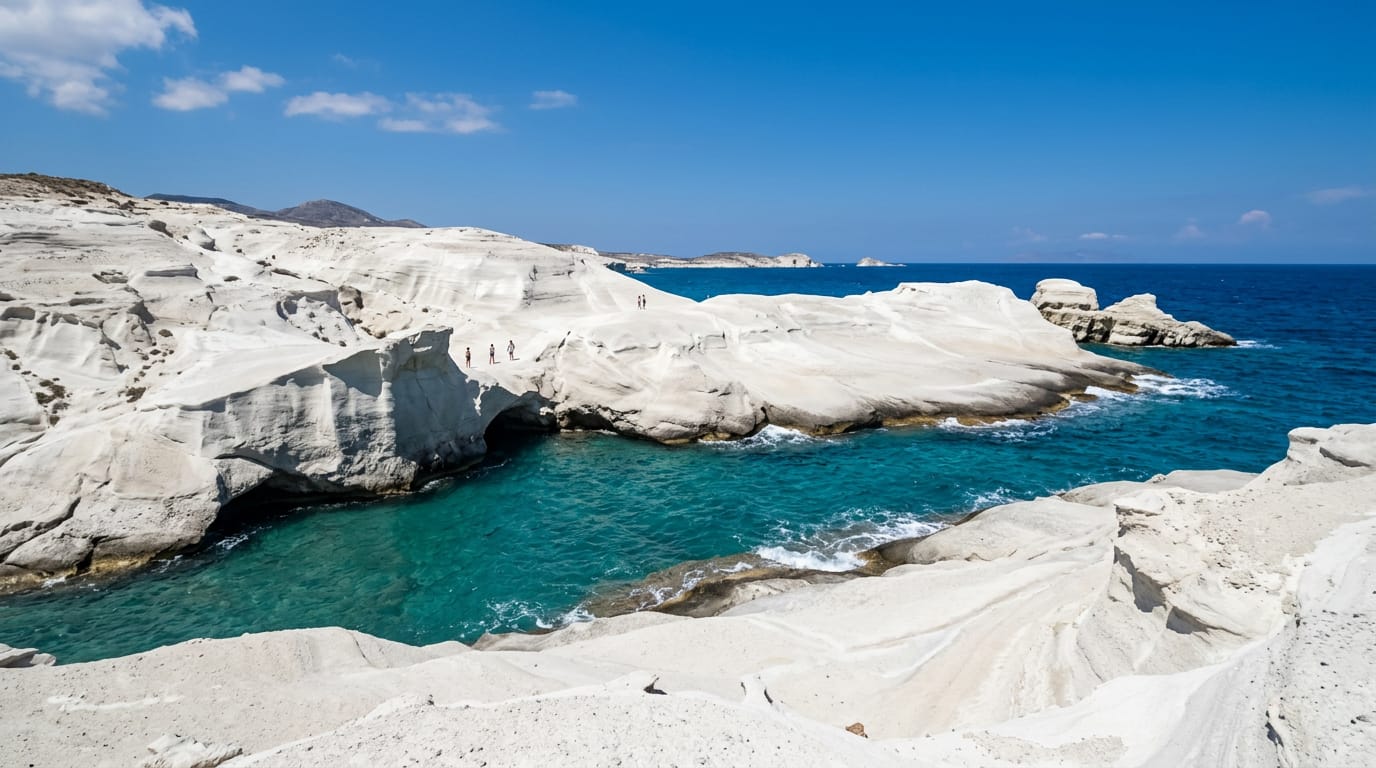
Sarakiniko is Milos’s most famous beach, where white volcanic rock has been sculpted into smooth, moon-like formations. The contrast between brilliant white rock, deep blue sea, and bright sky creates otherworldly beauty. It does attract visitors, but the island has so many other stunning beaches that crowds are never a problem.
Kleftiko, accessible only by boat, features towering white cliffs and sea caves that glow blue from reflected light. Boat trips here feel like discovering a secret, though it’s a secret worth sharing.
The main town, Plaka, cascades down a hillside with views across the bay. The kastro at the top offers sunset views that rival Santorini’s, with a fraction of the crowds. The island’s fishing villages, Klima, Mandrakia, and Firopotamos, feature traditional boat houses with colourful doors opening directly onto the water.
Milos also has fascinating history. The ancient theatre overlooks the sea where the Venus de Milo was discovered. The Catacombs, some of Christianity’s earliest gathering places, remind you that these islands have witnessed thousands of years of history.
Folegandros: Pure Cycladic Beauty
If you want to experience what the Cyclades felt like before mass tourism, Folegandros is your island. Dramatically beautiful and refreshingly undeveloped, this is Greece at its most authentic.
Hora, the main village, is stunning. Built on a clifftop for protection from pirates, its car-free streets wind between cubic white houses, small churches, and squares where locals still outnumber visitors. The evening volta (promenade) is a genuine social ritual, not a tourist attraction.
The Church of Panagia sits on the cliff edge above town, reached by a zigzag path that’s atmospheric at sunset when locals climb up for evening services. The views from here encompass the Aegean dotted with islands, a reminder of how interconnected this world is.
Folegandros’s beaches require some effort, which keeps them relatively quiet. Katergo is accessible by footpath or small boat, while Angali offers waterfront tavernas where you can spend lazy afternoons. The lack of easy beach access means Folegandros attracts people who value tranquillity over convenience.
This isn’t an island for those seeking nightlife or resort amenities. It’s for people who want to read in quiet coves, eat simple food cooked well, and experience Greek island life as it’s been lived for generations.
Symi: Neoclassical Gem Near Rhodes
Symi punches above its weight for beauty. As your ferry enters Gialos harbour, pastel-coloured neoclassical mansions rise in tiers up the hillside, creating one of Greece’s most photogenic scenes. This isn’t accidental; Symi was wealthy from sponge diving and shipbuilding, and the architecture reflects that prosperous past.
The harbour is lined with restaurants and cafes, but climb up to Chorio, the upper town, and you’ll find authentic neighbourhood life. The walk up is steep but worth it for the views, the churches, and the sense of discovering a place tourists often miss.
Panormitis Monastery, on the island’s south coast, is a major pilgrimage site with a stunning setting. Day trips by boat combine monastery visits with swimming stops at remote beaches.
Symi’s beaches are mostly small and pebbly, accessed by water taxi or footpath. This keeps them peaceful. The swimming is excellent, and the water clarity is exceptional.
The island’s size means everything is nearby. You can split your days between beach swimming, town wandering, and long taverna lunches without ever feeling rushed.
Kefalonia: Ionian Beauty with Diverse Landscapes
Kefalonia, the largest Ionian island, offers variety that smaller islands can’t match. This is a proper holiday island where you could spend two weeks without running out of things to see.
Myrtos Beach, backed by dramatic white cliffs, is legitimately one of Greece’s most beautiful beaches. The turquoise water and white pebbles create colours that seem too perfect to be natural. It’s popular, but the beach is large enough to absorb visitors.
Melissani Cave, an underground lake where sunlight streams through the collapsed roof, is genuinely magical. Rowing across this subterranean water, with stalactites overhead and fish visible in the clear depths, feels mythological.
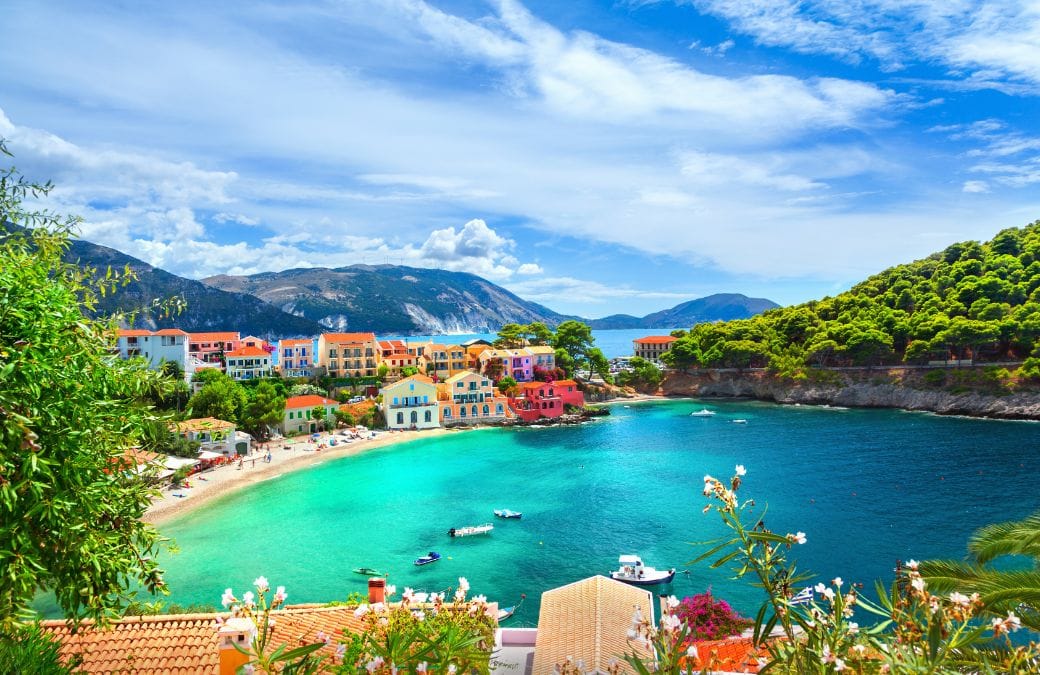
The villages each have distinct character. Fiscardo, which survived the 1953 earthquake, retains Venetian-era buildings and a yacht-harbour sophistication. Assos, tucked beneath a peninsula topped by a Venetian fortress, is picture-perfect. Mountain villages like Sami offer authentic Greek life away from the coast.
Robola, Kefalonia’s white wine, has gained serious recognition. Visiting producers and tasting in the vineyards adds cultural depth to your holiday.
Captain Corelli’s Mandolin brought tourism to Kefalonia, but the island has substance beyond its film fame. The combination of stunning beaches, mountain villages, historic sites, and excellent food makes it a complete destination.
Island Hopping Made Easy
One of the Greek islands’ great pleasures is combining several in one trip. Ferry connections make island hopping straightforward, and each island reveals a different aspect of Greek culture.
You might start in Paros, spend a few days exploring its towns and beaches, hop to Naxos for mountain villages and ancient sites, then finish in Milos for geological wonders. Or combine Kefalonia’s variety with quieter Ithaca nearby.
Our Greece specialists have extensive personal knowledge of these islands. We know which combinations work best, which ferries are most reliable, and how to pace your trip so you’re exploring rather than constantly packing and unpacking. We’ll book your ferries, arrange transfers, and choose accommodation that shows you each island at its best.
With ABTA and ATOL protection and over 40 years of experience, we’ll ensure your Greek adventure runs smoothly from start to finish.
Discover The Greece Locals Know
These islands haven’t been discovered; Greeks have known about them forever. They’re where Athens residents escape for summer, where extended families gather, where traditions survive because tourism hasn’t overwhelmed them. By choosing these islands, you’re not settling for second-best. You’re experiencing Greece as it’s meant to be: warm, authentic, beautiful, and welcoming.
Visit your local Spear Travels Group branch and tell us you’re ready to explore Greece beyond the postcards. We’ll create an island-hopping itinerary that shows you the Aegean at its finest.
Make this the year you discover the Greek islands that Greeks love most.
Rather speak to someone in person?