


Want a summer holiday that beats another week in the Med? Head east. While much of Southeast Asia is in monsoon season in August, Borneo is heading into its drier window. River cruises are calmer, wildlife is more active, and the lodges are easier to reach.
It’s a long-haul flight, but it’s the kind of trip that earns its place on your “what I did this summer” list.
Why August works for Borneo
The main rainy season in Malaysian Borneo runs roughly from November through March. August and September sit in one of the drier pockets, with lower rainfall, clearer skies and lower river levels. That matters when your itinerary involves boat trips along the Kinabatangan, dawn walks in primary rainforest, or visiting rehabilitation centres in the Sepilok reserve.
There’s a trade-off to know about. June, July and September are the busiest months, with international school holidays in full swing. August sits between two of those peaks, so you get the dry weather without quite the same crush. Book river lodges and Sepilok visits well in advance, though, particularly if you’re travelling as a family.
The wildlife you can actually see
Borneo is one of the few places on Earth where orangutans, proboscis monkeys and pygmy elephants can all be seen in the wild, sometimes within the same afternoon.
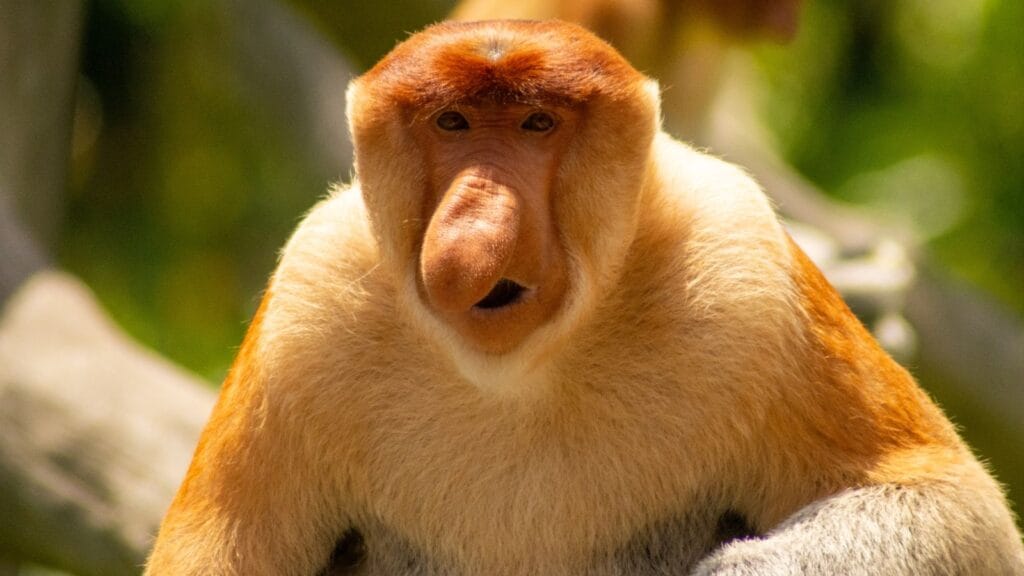
The proboscis monkey is the headline act, and rightly so. An odd-looking primate with a pendulous nose, a pot belly and a tail longer than its body, found only on this island. They tend to settle in the trees along riverbanks, and a quiet boat trip at dusk is often the best way to see them.
Orangutans are the other big draw. The Sepilok Orangutan Rehabilitation Centre near Sandakan cares for rescued and orphaned animals before release back into the wild. Visitors can watch the morning feeding sessions from a boardwalk, which feels genuinely close without being intrusive.
Beyond those two, look out for sun bears (the world’s smallest bear species), Bornean gibbons, hornbills, macaques and an astonishing range of birdlife. With a guide who knows what to listen for, the forest is loud.
Where to go in Malaysian Borneo
Sandakan and the Kinabatangan River
Most wildlife-focused itineraries start on the east coast, around Sandakan. Sepilok is roughly half an hour from town, and the Kinabatangan River is a couple of hours further. The river runs through a corridor of protected rainforest, and lodges along its banks run early morning and late afternoon boat trips. Most itineraries here are three or four nights, often combined with Sepilok and a night or two in Sandakan itself.
Danum Valley
If you want a deeper rainforest experience, the Danum Valley Conservation Area is one of the oldest rainforests in the world, at over 130 million years old. It’s more remote, the lodges are simpler, and the canopy walks are higher. You’ll see fewer large mammals than on the Kinabatangan, but you’ll see primary forest in a way that’s hard to match elsewhere in Southeast Asia. The trade-off is access: it’s a few hours’ drive from Lahad Datu, and you’ll need a permit.
Kota Kinabalu and the north
Kota Kinabalu is the main gateway on the west coast and a useful base if you want a bit of beach or city time before or after a wildlife itinerary. The Crocker Range nearby has some excellent forest drives, and the Kota Kinabalu wetlands attract proboscis monkeys in the evening. If you fancy a day trip, the Mari Mari cultural village gives a useful intro to Borneo’s indigenous communities.
Sarawak
On the Malaysian side of the island, Sarawak has its own character. Bako National Park, easily reached from Kuching, is a good place to see proboscis monkeys up close, plus bearded pigs and flying squirrels. Head further inland and you get longhouse stays with Iban communities, jungle trekking and the chance to see the Rafflesia flower in season.

Practical bits worth knowing
Most itineraries start with a flight into Kota Kinabalu, the capital of Sabah, or sometimes Kuching if you’re heading to Sarawak. Internal flights link Kota Kinabalu to Sandakan and Lahad Datu, so you don’t need to overland it.
The time difference is eight hours ahead of GMT, which makes jet lag manageable. Currency is the Malaysian Ringgit, and ATMs are easy to find in the cities. Health-wise, your GP can advise on vaccinations, and some rural areas of Borneo need consideration for mosquito-borne illness, even in the drier months.
What to pack matters more than you’d think. Lightweight long sleeves and trousers work best for evenings in the forest, where mosquitoes are active even in the dry season. A decent pair of binoculars is worth its weight in gold.
Booking and timing
Most wildlife-focused Borneo itineraries run between 10 and 14 nights, often combined with a quieter beach stay at the end. Gaya Island, just off Kota Kinabalu, or one of the smaller islands in Tunku Abdul Rahman National Park, work well as a wind-down after a busy week on the river.
If you’re tied to the UK school summer holidays, August is workable, but you’ll want to book well in advance. The drier windows either side (April to July, or September) often work better for families who can flex dates, and the wildlife is just as good.
October onwards and you’re back into wetter conditions, though the forests are noticeably lusher for it.
Talk it through with us
Borneo in August isn’t a casual booking, but it’s the kind of trip our teams at Spear Travels love to put together. If you’d like to talk through an itinerary, from river lodges to internal flights, pop into your local Spear Travels branch or give us a call. We’ll get the boring bits sorted so you can focus on the wildlife.